
Last updated November 23, 2026
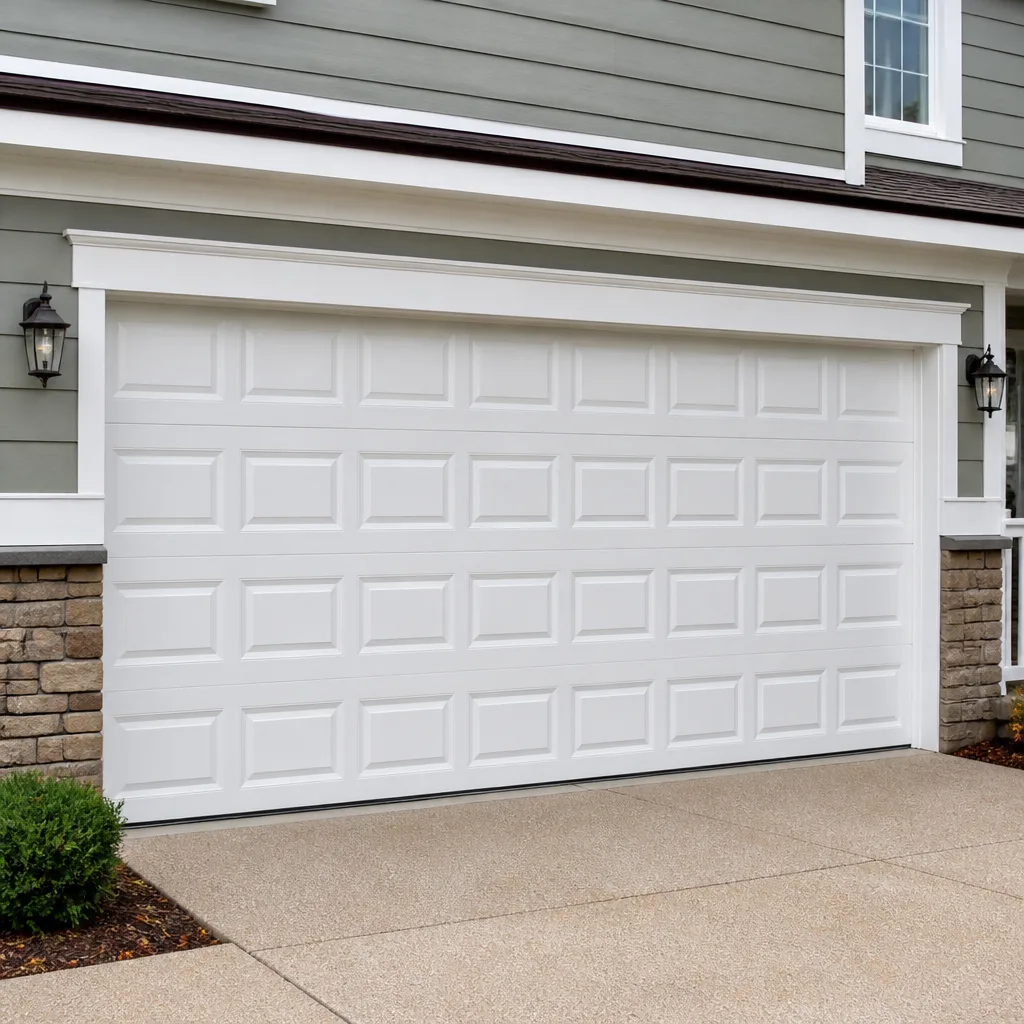 Raised-panel steel
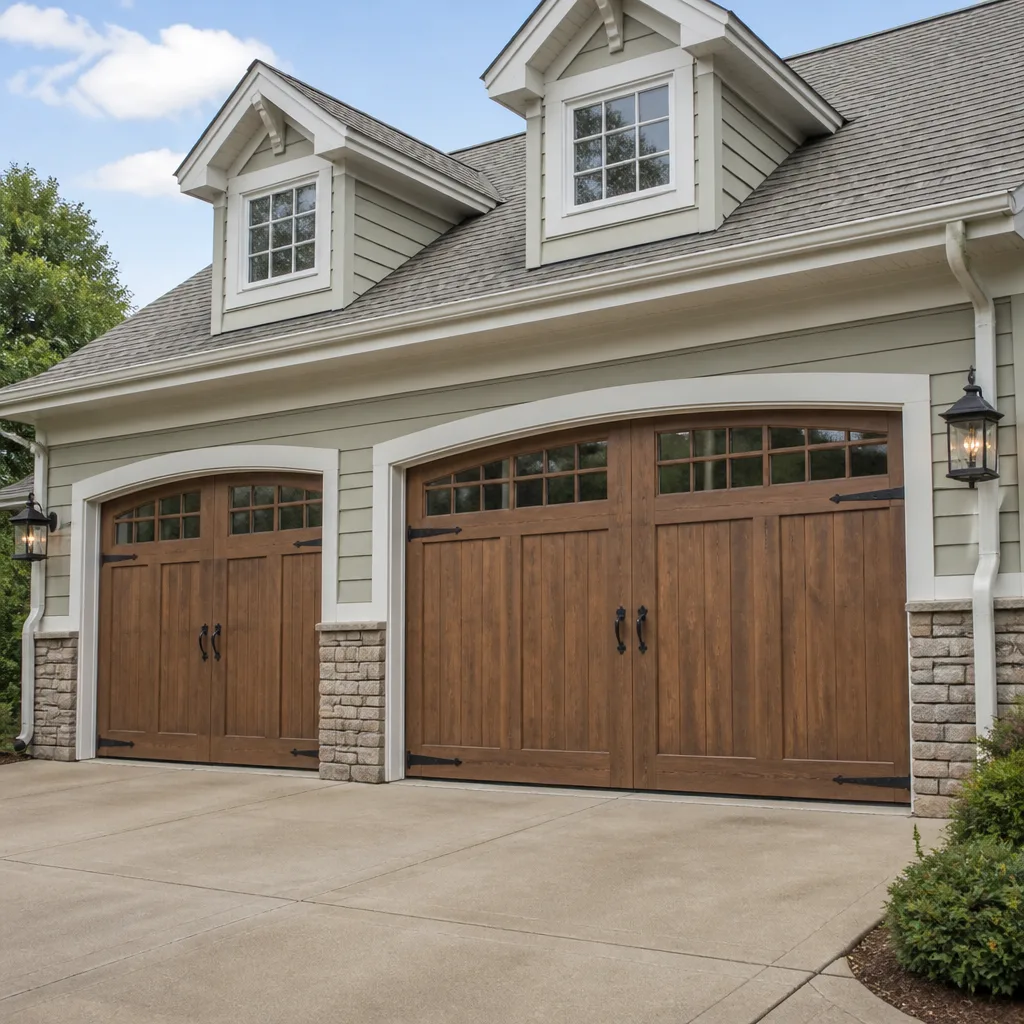 Carriage house
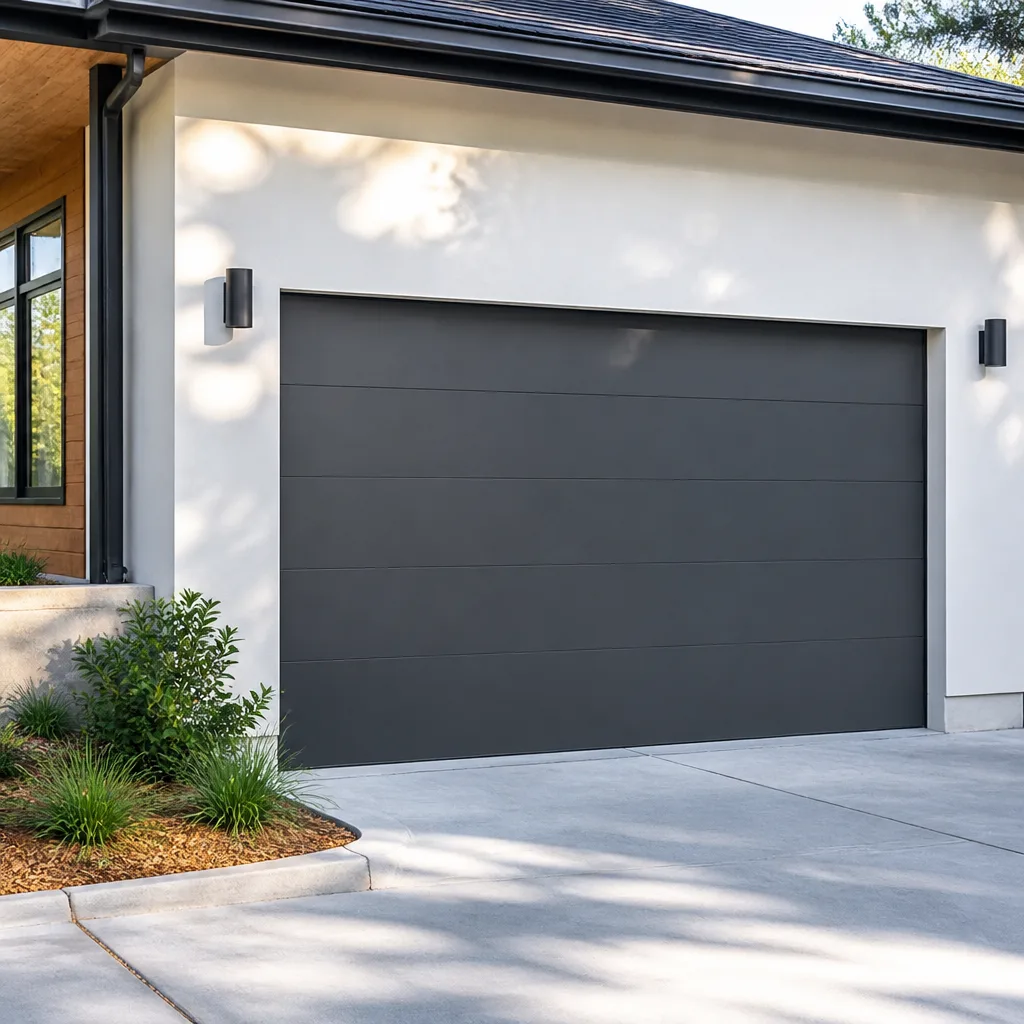 Modern flush
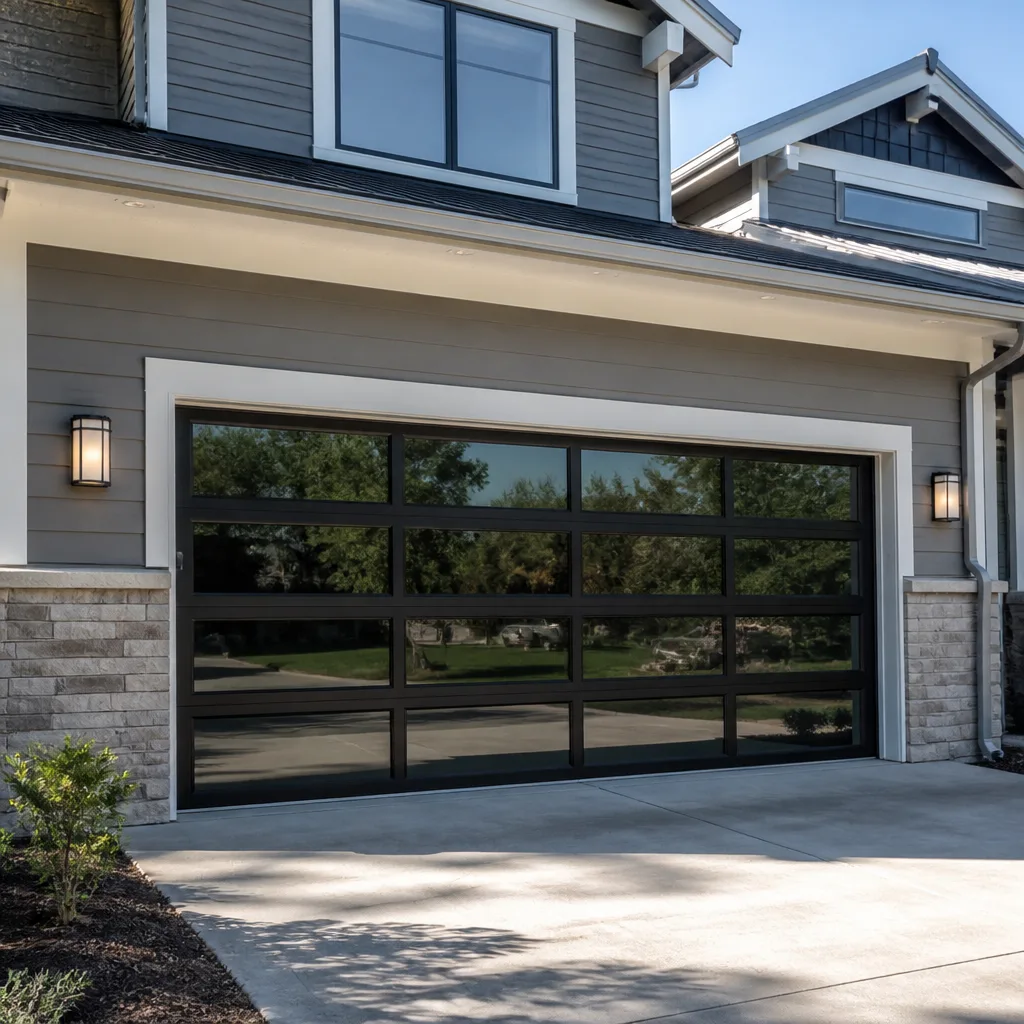 Full-view glass
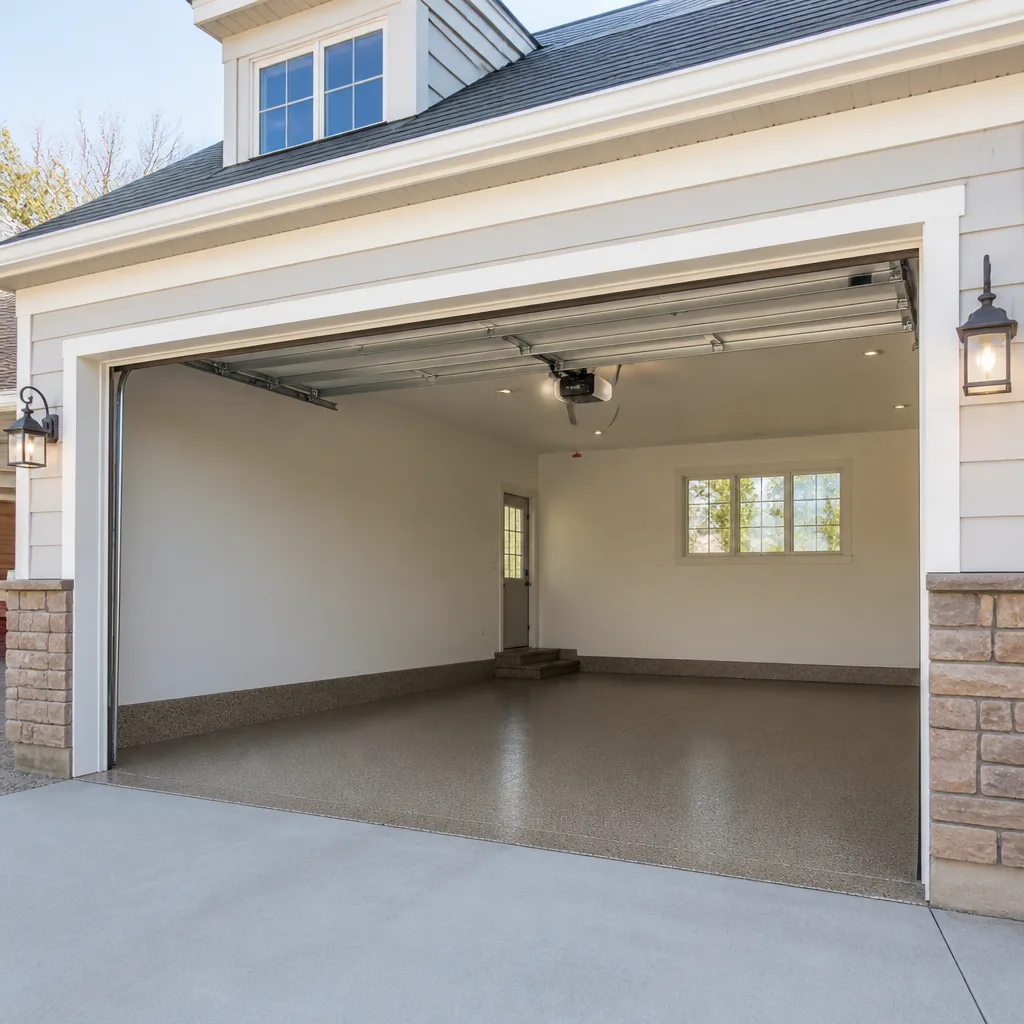 LiftMaster openers
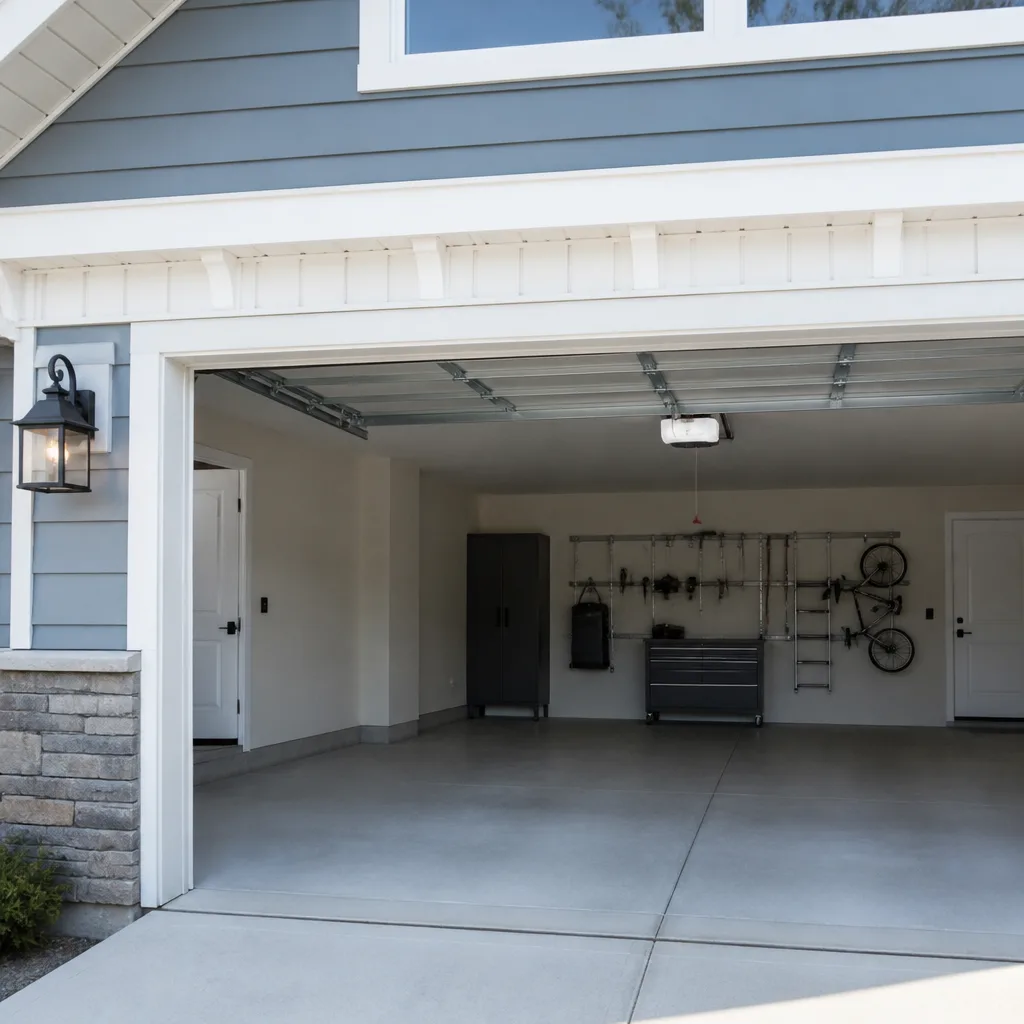 Chamberlain openers
Full 25-point door and opener safety check with every visit - springs, cables, rollers, tracks, and your LiftMaster or Chamberlain opener included
You get a price before we start. It does not change when the pro arrives.
Get your free estimateSeasonal Garage Door Care for Queen Anne: Year-Round Homeowner’s Guide
Most garage door advice assumes a place with four tidy seasons. Queen Anne doesn’t have that. It has a long wet stretch that runs from fall into late spring, a short, sharp freeze window that usually lands in December or January, and a dry summer that brings its own set of problems. The failures we see most often on Queen Anne aren’t caused by any single season. They come from the gaps between them, when the hardware sits untouched for months and then gets hit with a temperature swing. This guide maps maintenance to the weather Queen Anne actually gets, not the calendar from a generic blog post: what to check before the rain settles in, what to do when a cold snap freezes a door to its seal, how to recover in spring, and how to keep a wood door from swelling in summer heat. By the end you’ll have a year-round rhythm you can actually keep.
Quick Answer
In Queen Anne, garage door care follows three real seasons rather than four: a pre-wet-season service in October (seals, lubrication, cable check), a freeze-event protocol for the December to January cold snaps, and a post-wet-season reset in spring (rust treatment, track cleaning, opener recalibration) before the dry summer. Annual tasks, like a spring cycle-count assessment and side-seal replacement, belong on a fixed date so they don’t get skipped.
Styles & brands we work with
- Raised-panel steel
- Carriage house
- Modern flush
- Full-view glass
- LiftMaster openers
- Chamberlain openers
Table of Contents
- Why Queen Anne’s Weather Breaks the Four-Season Rule
- October: The Pre-Wet-Season Service That Prevents Winter Failures
- The Freeze-Event Protocol: What to Do When the Door Won’t Budge
- Spring: Rust, Winter Grit, and Opener Recalibration
- Summer Heat and Wood Door Swelling
- The Annual Tasks That Don’t Belong to a Season
- A Note on Brand-Specific Care
Why Queen Anne’s Weather Breaks the Four-Season Rule
Generic maintenance calendars assume a wet spring, a dry summer, a crisp fall, and a snowy winter. Queen Anne’s pattern is lopsided. The wet period is long, the freeze window is short but intense, and the summer is dry enough to matter for wood doors and door alignment. That shape matters because different components fail for different reasons at different times.
Torsion springs, cables, and rollers fail most often in the transition between the wet season and the cold snap, when temperatures drop fast and lubrication has stiffened or washed away. Bottom seals take the most punishment during the long wet months, when standing water at the threshold works at the rubber. Tracks collect grit over the wet season and then bind when the humidity drops. Wood doors swell in summer heat and shrink again in the wet season, which stresses joints and hardware.
If you’re planning a maintenance calendar around Queen Anne’s climate, here’s the shape it takes:
- October: before the wet season sets in
- December to January: the freeze window, when the cold snap is measured in days, not months
- March to April: recovery after the wet season ends
- July to August: the dry summer, which is where wood doors and alignment get tested
The calendar in this guide is built around those windows. If you handle the October work and the freeze protocol, you’ve prevented the majority of winter failures. The spring and summer work is about restoring the door’s margin so it’s ready for the next wet season.
October: The Pre-Wet-Season Service That Prevents Winter Failures
The single most useful garage door task in Queen Anne happens in October, before the rain settles in for the long stretch. The goal is to get the door’s mechanical margin up before the coldest, wettest months arrive. Three areas matter most.
Inspect and treat the bottom seal
The bottom seal is the rubber strip along the bottom of the door. It’s the first thing to fail in a wet climate because it’s in constant contact with a damp threshold. Check for brittleness, cracking, or a flat spot where the door has been resting. If the seal has compressed enough that you can see daylight or feel a draft under the closed door, replace it before the wet season. A worn seal doesn’t just let water in. It lets cold air in, which is the next problem covered in the freeze protocol.
Lubricate the hinges and rollers with the right product
This is where most generic advice falls short. “Use lubricant” tells you nothing, and the wrong product causes more harm than good. Use a purpose-made garage door lubricant, typically a lithium or silicone-based spray designed for metal-on-metal and roller-on-track contact. Don’t use household oil, cooking oil, or WD-40 as a lubricant; they attract dust, gum up in cold, or don’t hold up under the load a torsion spring puts on the system. Apply to the hinge pivots, the roller bearings (not the track itself), and the torsion spring (a light spray, not a soak). Wipe off excess. The rollers on a Wayne Dalton or Clopay door use the same principle, though the roller type may differ.
Do a visual cable check
Cables are under high tension. Look for fraying, kinks, or discoloration near the drums at the top corners and the bottom brackets. If you see damage, don’t touch the cable. A loaded garage door cable can cause serious injury. Call a professional. The visual check is the homeowner’s job; adjusting or replacing a cable is not.
The Freeze-Event Protocol: What to Do When the Door Won’t Budge
Queen Anne’s freeze window is short, but it catches people off guard every year. The most common scenario is a door that freezes to its bottom seal overnight. The instinct is to hit the opener and force it up. Don’t. The opener, not the door, is what breaks first when you force a door that’s bonded to its seal. The motor pulls, the door doesn’t move, and the opener’s drive gear or limit switch gets damaged.
Here’s the protocol for a frozen door, in order:
- Stop. Don’t press the opener again. If the door hasn’t moved on the first attempt, the door is bonded to the seal.
- Break the bond physically. Gently work a plastic scraper or a soft mallet around the bottom edge where the door meets the seal. Don’t use a metal tool directly on the panel. Work slowly around the whole bottom edge.
- Check the seal for damage. If the seal has torn or come loose in the cold, it should be replaced before the next freeze.
- Test with a manual operation first. Disconnect the opener (the release handle) and lift the door by hand. If it moves freely, reconnect and test the opener. If it still binds, the door may be frozen at the hinges or rollers, not just the seal.
If you’re dealing with a LiftMaster or Chamberlain opener, check the force settings after a freeze event. A door that was fine last week may now trip the safety reverse. That’s often a sign the door needs adjustment, not the opener. If you’re not comfortable with the settings, garage door opener repair is the right call.
Spring: Rust, Winter Grit, and Opener Recalibration
The wet season leaves a mark. By March or April, the door has had months of moisture, grit kicked up onto the tracks, and temperature swings that have moved the opener’s tolerances. The spring reset is about undoing that wear before the dry summer. Three tasks cover most of it.
Treat rust on exposed hardware
Look at the hinges, the bottom brackets, the roller stems, and the bolts along the panel seams. Surface rust is common in a wet climate and is usually cosmetic, but if it’s pitting the metal, the hardware should be replaced. Clean with a wire brush, apply a rust-inhibiting primer on bare spots, and repaint. Don’t ignore rust on a spring or cable; that’s a professional inspection item.
Clean the tracks of winter grit
Grit on the tracks causes binding, and binding puts extra load on the opener and springs. Wipe the inside of each track with a damp cloth, then dry. Don’t lubricate the tracks; they should be clean and dry. Lubricate the roller bearings, not the track surface. Check for bent track sections, especially at the curve where the door transitions from vertical to horizontal.
Recalibrate the opener’s sensitivity
After a winter of temperature swings, the opener’s force and travel limits may need adjustment. Test the safety reverse first: place a small object (a roll of paper towels works) under the door and close it. If the door doesn’t reverse on contact, the force or travel limit needs adjustment. On a Raynor or Craftsman unit, the adjustment screws are typically on the motor housing; the manual will specify which is force and which is limit. If the door reverses on its own with nothing in the way, the travel limit is likely set too far.
Summer Heat and Wood Door Swelling
Queen Anne’s summer is dry, but the occasional heat dome pushes temperatures high enough to affect wood doors. Wood expands in heat and humidity and shrinks in the dry season. A wood door that fits well in April can swell enough by August to bind in the frame, and a door that binds will put extra load on the opener and springs. The adjustment points are the hinges and the track brackets.
If the door is binding, loosen the hinge screws slightly to allow a small amount of play, and check the track brackets for any that are pressing the door against the frame. Don’t force the door; a binding door that’s forced will crack the panel or damage the opener. Check the side seals for pinching; a swollen door against a tight side seal can cause the opener to strain.
Swelling that doesn’t resolve with adjustment is a sign of a deeper problem. If a section has warped rather than simply swollen, the panel may need replacement, which is a garage door repair job, not a maintenance task. A wood door that consistently binds in summer is worth a professional look.
The Annual Tasks That Don’t Belong to a Season
Some maintenance doesn’t fit a season; it fits a date on the calendar. Without a prompt, these are the tasks that get skipped. Put them on the same date each year, ideally in the fall or spring when you’re already doing the seasonal work.
Spring cycle-count assessment. A torsion spring has a finite number of cycles, and every open-close is one cycle. You can’t reverse the wear, but you can track it. Note the date you last replaced the spring and roughly how many times the door opens and closes per day. A spring that’s approaching the end of its typical life is worth replacing before it fails, because a failed spring leaves the door unusable and the car trapped. If you don’t know the spring’s age, a professional can assess it visually.
Side-seal replacement. The side seals (the vertical strips along the frame) are the second thing to fail after the bottom seal. Check for gaps, brittleness, and compression. Replace them annually or when you see daylight or feel a draft. This is a simple task that can be done with basic tools; the seals are sold as a kit for most doors.
Opener battery and safety reverse test. Replace the opener’s backup battery (if it has one) once a year, and test the safety reverse monthly. This is a five-minute task that prevents a lot of frustration.
A Note on Brand-Specific Care
Garage doors are all we do, and we work on eight major brands specifically: LiftMaster, Chamberlain, Genie, Clopay, Amarr, Wayne Dalton, Craftsman, and Raynor. Brand matters for maintenance because different systems use different components. A Wayne Dalton door may use a specific roller and hinge combination that isn’t interchangeable with a Clopay door. A LiftMaster opener’s force settings are adjusted differently than a Genie’s. Knowing the brand means diagnosing by how that system actually works, not by guesswork.
If you’re not sure what brand your door or opener is, look for the label on the inside of the panel or the opener’s motor housing. That label determines the parts and the adjustment procedure. When you call us, having the brand and model handy helps us get to the right answer faster. Our technicians have up to 10 years of experience across these brands, and we carry parts for the most common systems.
Common Mistakes to Avoid
- Forcing a frozen door with the opener. The motor breaks before the seal does. Break the bond by hand first, then test the opener.
- Using household oil or WD-40 as a door lubricant. These attract grit and gum up in cold. Use a purpose-made garage door lubricant on hinges and roller bearings.
- Lubricating the tracks. Tracks should be clean and dry. Lubricant on the track surface attracts dust and causes binding.
- Skipping the October service. The single most effective task is the one most people skip: getting the door’s margin up before the wet season. Do it in October, not “sometime this winter.”
- Ignoring rust on springs and cables. Cosmetic rust on hinges is normal. Rust that’s pitting a spring or cable is a professional inspection item.
- Assuming a binding door is an opener problem. A door that binds in summer is often a wood-swelling issue, not an opener failure. Check the door before replacing the opener.
- Never testing the safety reverse. A monthly test takes less than a minute and prevents the most common opener failure.
See the difference
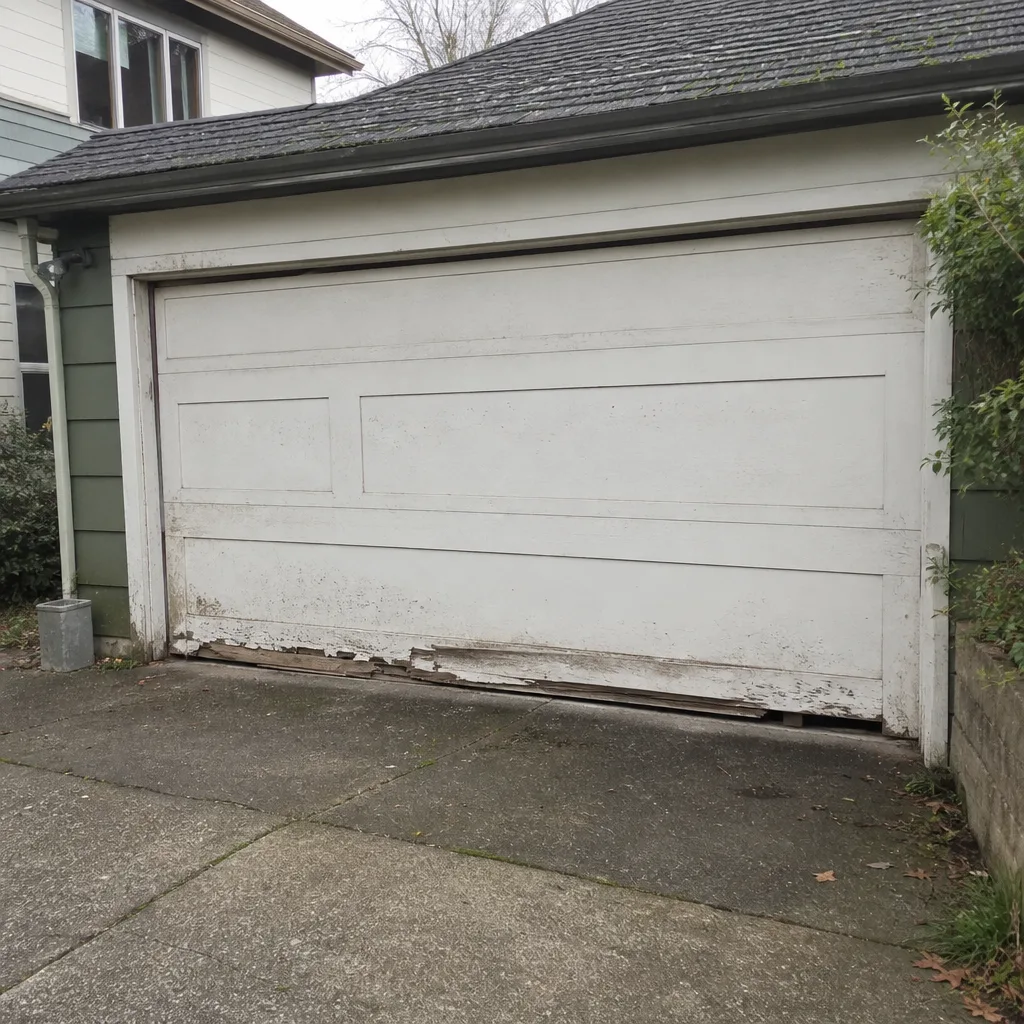 Before
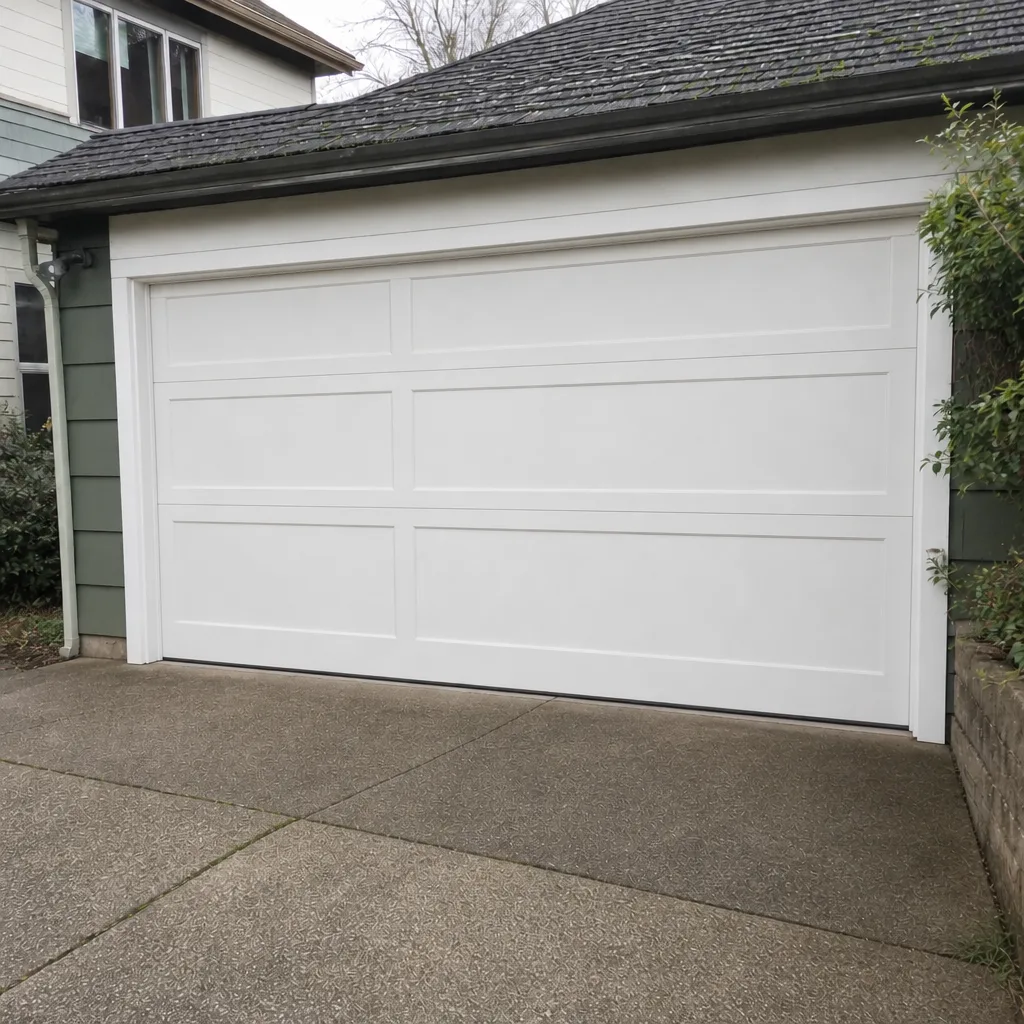 After
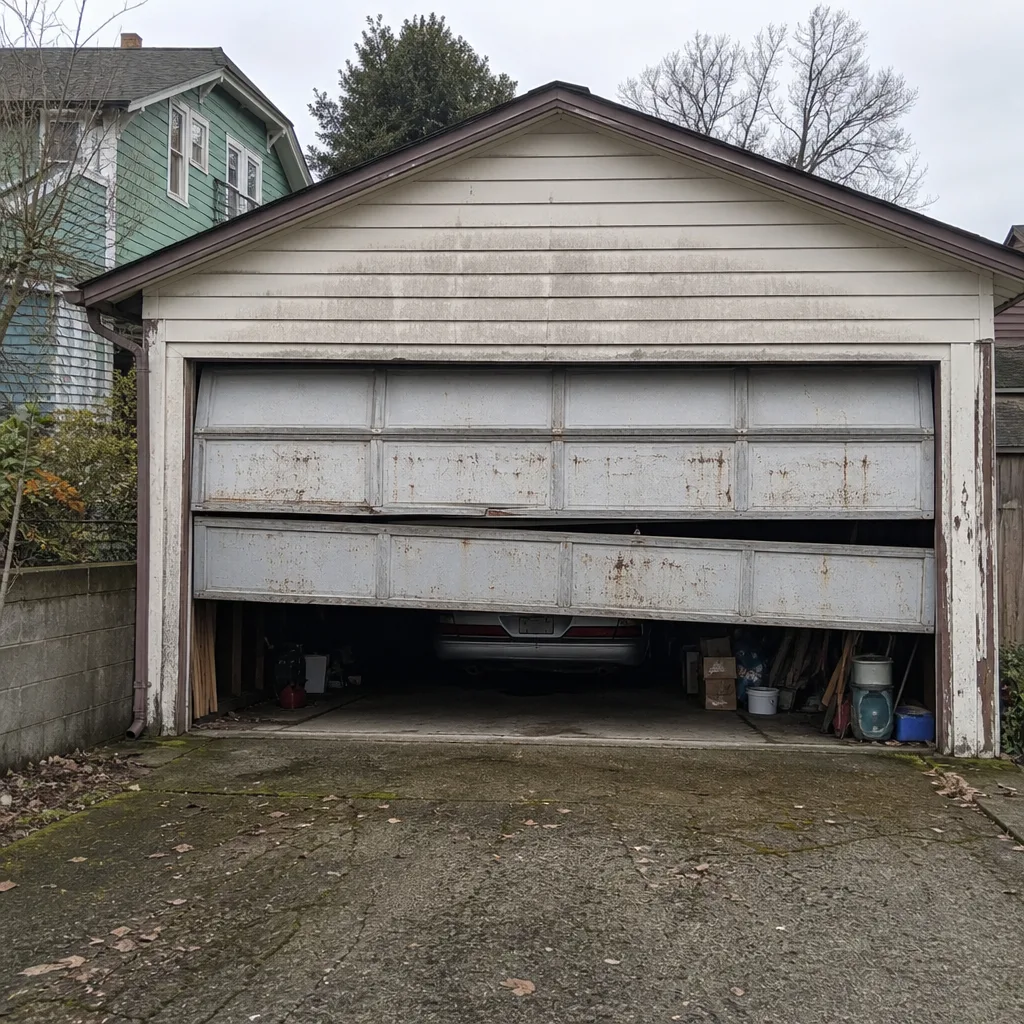 Before
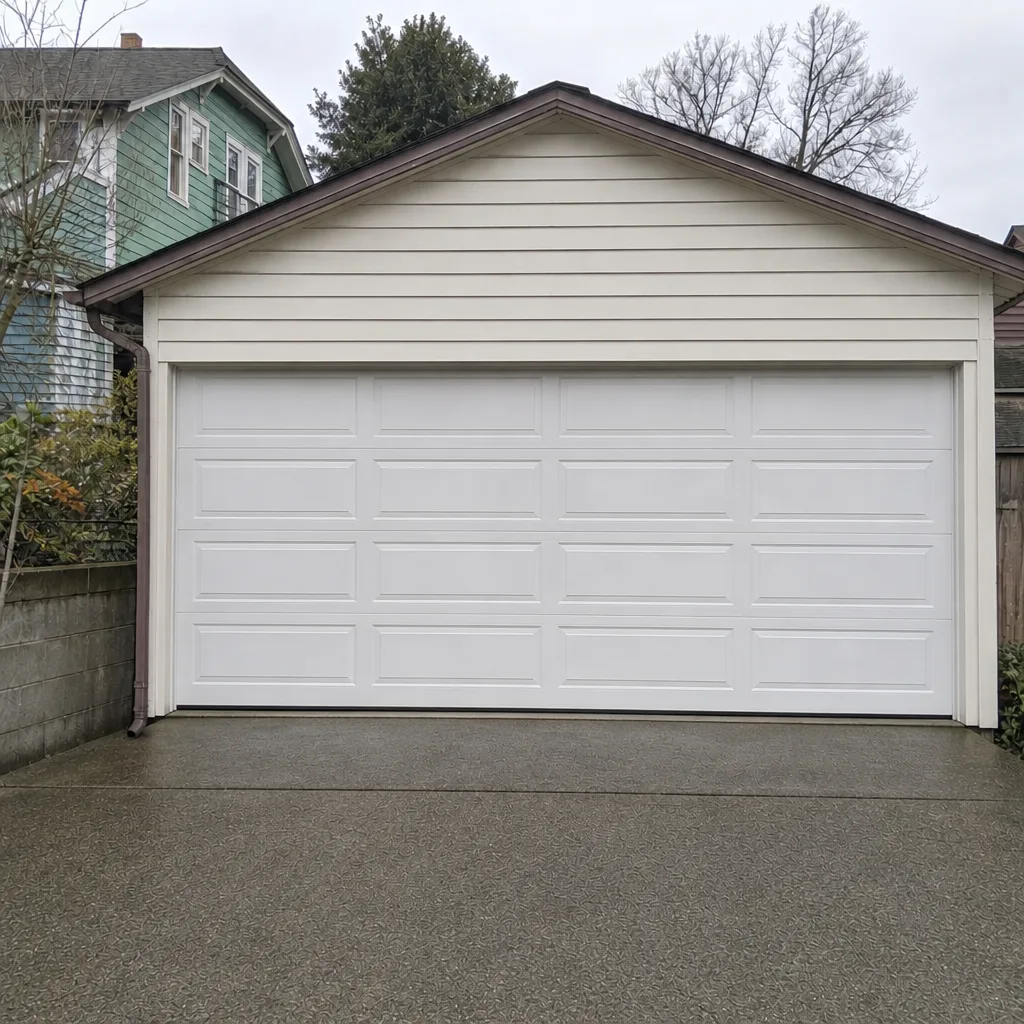 After
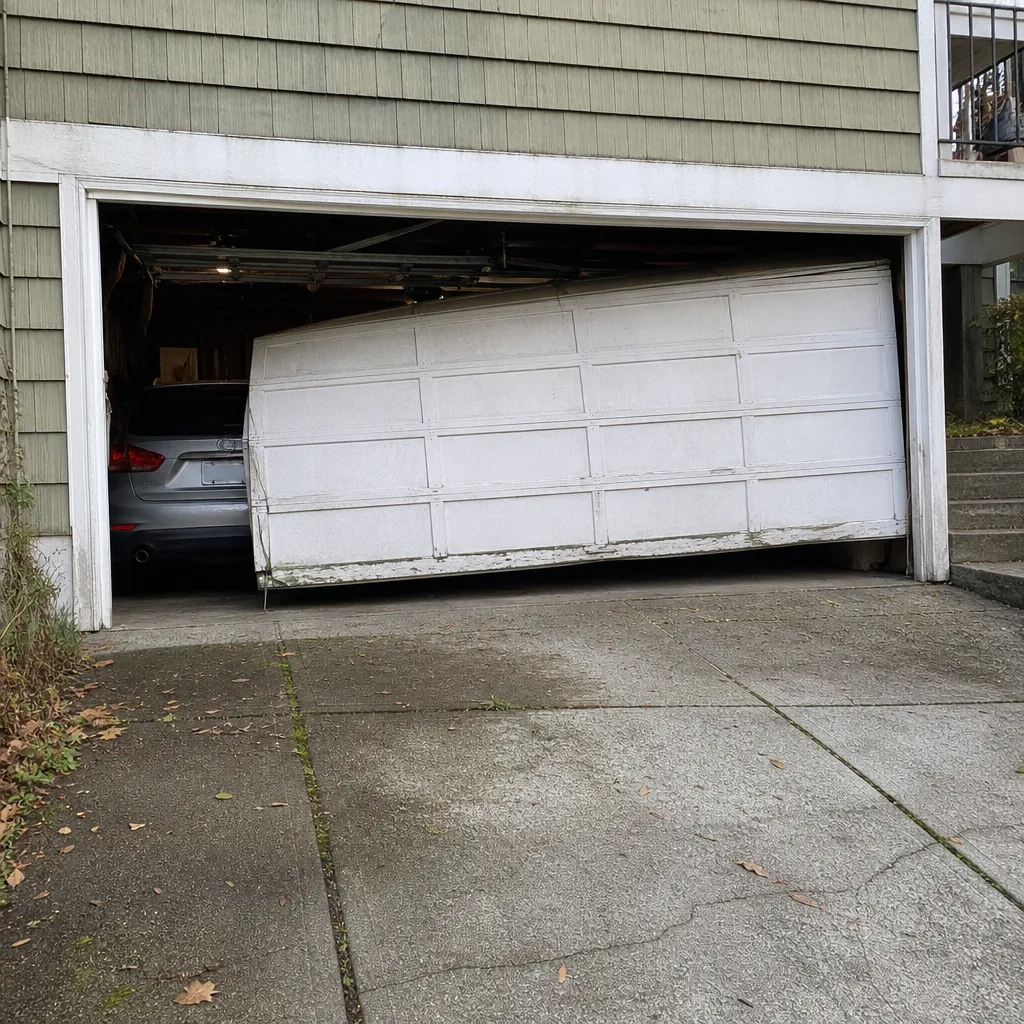 Before
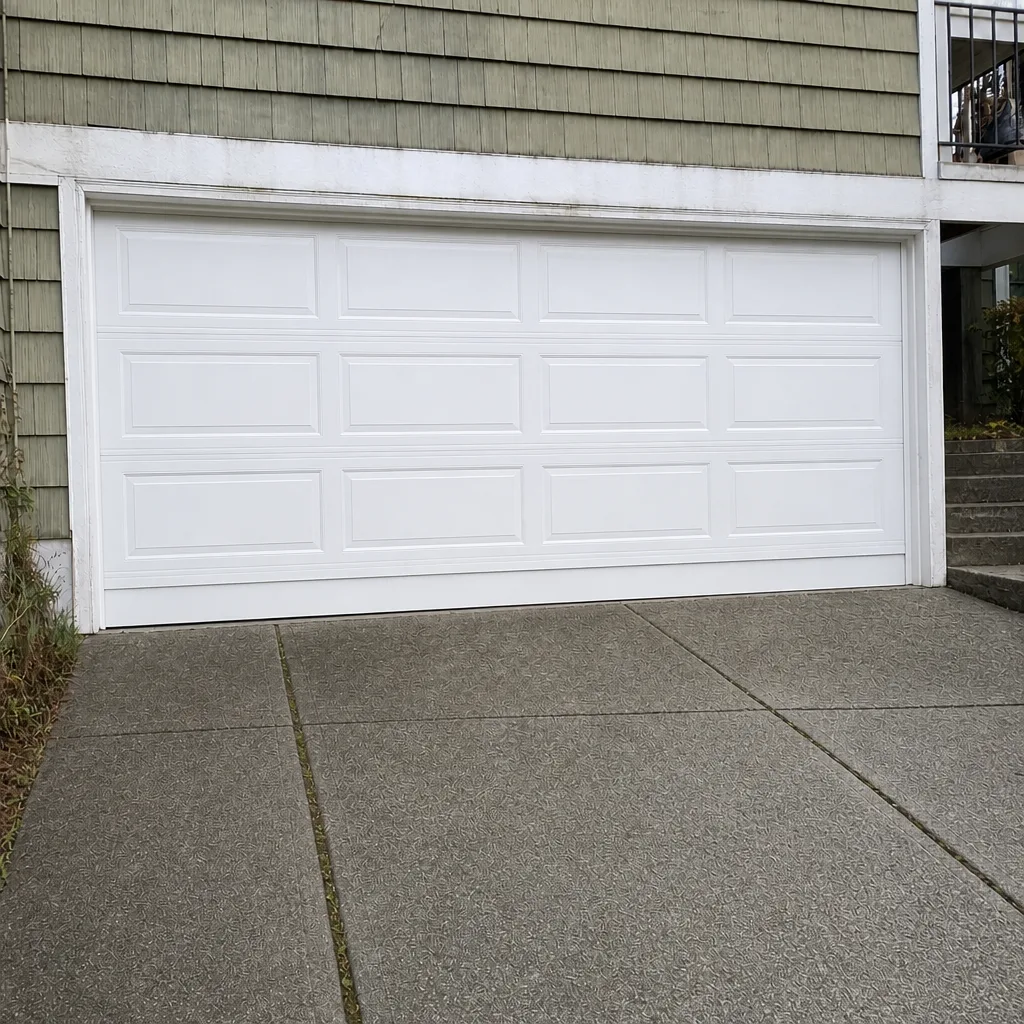 After
When to Call a Professional
Some tasks in this guide are homeowner jobs: lubrication, visual checks, seal replacement, track cleaning. Others aren’t, and getting them wrong causes real harm. Springs, cables, and the torsion system are under high tension and can cause serious injury if handled by someone without the right tools and training. Call a professional if you see a frayed or kinked cable, if a spring is broken or making noise, if the door is off its track, or if the door binds after freezing and the manual protocol doesn’t free it. Queen Anne Garage Door Repair Queen Anne offers free estimates for any of these, including a diagnostic visit to assess spring life before it fails. This is the work we do every day, and we’d rather assess a worn spring before it breaks than replace a broken one in the cold.
Frequently Asked Questions
October is the most important month. Servicing before the wet season prevents the majority of winter failures. The second most important window is March or April, after the wet season, to reverse rust and recalibrate the opener. If you only do one service a year, make it October.
Moisture collects at the bottom seal and freezes when temperatures drop, bonding the door to the seal overnight. Don’t force it with the opener. Break the bond by hand with a plastic scraper or soft mallet, then test with a manual lift first. If the seal tears in the cold, replace it before the next freeze.
Yes, for the hinges and roller bearings. Use a purpose-made garage door lubricant, not household oil or WD-40. Apply to the hinge pivots and roller bearings, wipe off excess, and leave the tracks clean and dry. Don’t spray the cable or attempt to lubricate a torsion spring under tension without professional guidance.
Wood expands in summer heat, and a door that fits in spring can swell enough to bind. Check the hinge screws and track brackets for any point that’s pressing the door against the frame. If loosening the brackets doesn’t free the door, or if a section has warped, that’s a repair job, not a maintenance adjustment.
Replace side seals annually or whenever you see daylight, feel a draft, or notice brittleness or compression. They’re the second component to fail after the bottom seal, and they’re a straightforward replacement. Doing it at the same time as the October service keeps both seals on the same schedule.
Replacing a worn spring before it fails is worth considering because a failed spring leaves the door unusable and the car trapped. A professional can assess the spring’s condition visually. If you don’t know the spring’s age or how many cycles it has seen, an assessment is the way to find out. Calling (844) 670-3620 gets you a free estimate on a replacement. We answer 24/7. Fast dispatch from 7am to 7pm, Sunday through Friday.
The Bottom Line
Queen Anne’s calendar isn’t the four-season template. It’s a long wet stretch, a short freeze window, and a dry summer, and the failures that matter follow that shape. The October service (seals, lubrication, cable check) prevents most winter problems. The freeze protocol keeps you from damaging the opener when the door bonds to its seal. The spring reset reverses rust, cleans grit, and recalibrates the opener. Summer care is about wood and alignment. And the annual tasks (spring cycle-count, side seals, safety reverse test) belong on a fixed date so they don’t get skipped.
Get Your Free Estimate
If you’d rather have a professional handle the hard parts, or if you’re not sure what shape your door is in after the last season, call us. We offer free estimates in Queen Anne, and we’ll tell you what needs doing and what can wait. Call (844) 670-3620. We answer 24/7. Fast dispatch from 7am to 7pm, Sunday through Friday. From opener to panel to spring, garage doors are all we do.
Written by the team at Garage Door Repair Queen Anne.